If your website needs both development work and SEO, it is tempting to treat them as two separate projects: build or redesign the website first, then optimize it for search.
That can create unnecessary problems.
The better approach is to identify what is currently preventing the website from performing, then plan development and SEO together. If the existing website is broken, difficult to use, slow, insecure, or unable to support important business functions, fix the underlying website problems first. If the website works reasonably well but struggles to attract relevant organic traffic, SEO may deserve priority.
However, even when development comes first, SEO should be considered before the new website is designed or built.
Google specifically recommends considering SEO early when planning a new website or redesign so that search-friendly decisions can be incorporated into the site from the beginning.
Website Development vs SEO: Which Comes First?
There is no universal rule that says website development must always come before SEO, or that SEO must always come first.
The priority depends on the problem.
| What is wrong with the website? | Where to start |
|---|---|
| Forms, navigation, functionality, or important features are broken | Website development/repair |
| Website is difficult to use on mobile devices | Development/UX |
| Website is extremely slow or technically unstable | Development + technical SEO |
| Website works but gets little organic visibility | SEO |
| Important pages are not indexed | Technical SEO |
| Content does not match what people search for | SEO/content |
| Website gets traffic but few enquiries | UX/conversion improvements |
| A redesign is already planned | SEO should be involved before development |
| Domain, URLs, CMS, or site structure will change | SEO-led migration planning |
The key is to avoid fixing the wrong problem.
A beautiful new website will not automatically attract search traffic. Likewise, increasing organic visibility will not solve a website where visitors cannot navigate, submit forms, understand the offer, or complete important actions.
What Does Website Development Fix?
Website development deals with the technical and functional foundation of the website.
Depending on the project, this may include:
- Website structure
- Page templates
- Navigation
- Responsive design
- Mobile usability
- Forms and functionality
- CMS implementation
- Integrations
- Database functionality
- Website security
- Performance
- Hosting configuration
- E-commerce functionality
- Custom features
- Accessibility
- Technical infrastructure
Development becomes the more urgent issue when the existing website prevents customers from using it effectively.
For example, imagine a service business whose website looks acceptable but has a broken enquiry form. Sending more organic visitors to that website through SEO would not solve the underlying problem.
The first priority would be repairing the conversion path.
The same applies when the website is not usable on mobile devices, important pages are inaccessible, the CMS cannot support necessary content, or the existing architecture makes future improvements unnecessarily difficult.



What Does SEO Fix?
SEO focuses on helping search engines discover, understand, and appropriately surface useful website content.
SEO can involve:
- Keyword and search-intent research
- Content optimization
- Technical SEO
- Internal linking
- Crawlability
- Indexing
- Metadata
- Canonicalization
- Structured data
- Site architecture
- Image optimization
- Local SEO
- Search Console analysis
- Content improvements
- Organic search strategy
Google’s developer guidance emphasizes that websites should be secure, fast, accessible, work across devices, and make their content understandable to Google Search.
That means development and SEO are not completely separate disciplines.
A development decision can affect SEO, while SEO research can influence development decisions.
When Should You Prioritize Website Development?
Website development or repair should generally move toward the front of the queue when the website has serious usability or functionality problems.
1. Important functionality is broken
If users cannot submit forms, complete purchases, access important pages, or use core features, address those issues before investing heavily in attracting more visitors.
2. The website is difficult to use
Poor navigation, confusing page layouts, unclear calls to action, and difficult mobile experiences can make additional traffic less valuable.
A website does not need to be visually impressive to perform well. It does need to make it easy for visitors to understand what you offer and what they should do next.
3. The existing platform is holding the business back
Sometimes the problem is deeper than the design.
For example, the current website platform may make it difficult to:
- Create useful landing pages
- Manage important metadata
- Improve templates
- Add required functionality
- Manage products
- Improve performance
- Maintain content efficiently
In that situation, development may need to happen before a broader SEO strategy can be implemented efficiently.
4. Performance problems are severe
Slow pages can create both user-experience and technical concerns.
If your website has major performance problems, development and technical optimization may need to happen alongside SEO rather than treating them as completely separate projects.
For websites running on WordPress, you can also review existing resources such as the guide to optimizing website performance and the resource on boosting SEO rankings with page speed.
5. The website is fundamentally outdated
If the website cannot provide a reasonable experience on modern devices or no longer supports the way the business operates, SEO should not be used as a substitute for fixing the foundation.
In this case, redesign or redevelopment may be necessary.
When Should You Prioritize SEO?
SEO may deserve priority when the website itself is functional but search visibility is the main problem.
1. The website works, but relevant customers cannot find it
A website can look professional and still have weak organic visibility.
Possible causes include:
- Poor search-intent targeting
- Weak content
- Missing service pages
- Poor internal linking
- Technical indexing problems
- Weak site architecture
- Duplicate or competing pages
- Missing local SEO optimization
- Lack of useful topical coverage
If the underlying website is sound, a complete redesign may not be necessary.
An SEO audit can identify where the visibility problem actually comes from.
For example, if you need to distinguish between different optimization approaches, the existing technical SEO vs. content SEO guide can help frame the difference between technical and content-related problems.
2. Important pages are not indexed
If valuable pages are not appearing in search, investigate the technical cause before assuming a redesign is necessary.
Google recommends using Search Console and other debugging tools to understand how Google accesses and indexes a website.
3. Your content does not match search intent
You may already have a technically sound website but weak content.
For example, a service page might describe what the company does without answering the questions potential customers actually have.
In that situation, rewriting or restructuring the content may create more value than rebuilding the entire website.
4. Your internal linking is weak
Internal links help users move between related information and help search engines discover relationships between pages.
Instead of redesigning the entire website, you may be able to improve its existing information architecture through better navigation and contextual internal links.
5. Existing pages already have search value
A redesign should not automatically replace pages that already attract organic traffic, backlinks, impressions, or conversions.
Before removing or changing important URLs, identify what those pages currently contribute.
That becomes especially important when development involves a new CMS, new URL structure, or major content changes.


Why SEO Should Be Involved Before Website Development
This is where the distinction between SEO first and SEO planning first becomes important.
You may decide that the website needs a redesign first.
But that does not mean SEO should wait until after the redesign.
Google’s guidance says that when considering a redesign or new site, bringing SEO into the project early can help ensure the site is search-engine friendly from the beginning.
SEO research can influence decisions such as:
- Which pages should exist
- Which services deserve dedicated pages
- How navigation should be organized
- Which URLs should remain unchanged
- Which pages should be consolidated
- Which content should be retained
- Which pages already attract organic traffic
- How internal links should connect related content
- How redirects should be handled
- How important templates should be structured
This is much easier than trying to retrofit those decisions after development is complete.
What If Your Website Needs Both?
This is probably the most common situation.
The answer is usually not:
“Finish development, then start SEO.”
Instead, use a coordinated process.
Phase 1: Audit
Start by reviewing:
- Website functionality
- UX
- Mobile experience
- Performance
- Crawlability
- Indexing
- Existing URLs
- Organic traffic
- Search queries
- Important landing pages
- Conversions
- Content
- Internal links
- Technical problems
The goal is to understand what is working before changing it.
Phase 2: Prioritize
Separate issues into three groups:
Critical: Problems that prevent users or search engines from accessing important content.
High impact: Problems that significantly affect visibility, usability, or conversions.
Improvement: Useful enhancements that can be addressed after the foundation is stable.
This prevents a team from spending weeks redesigning minor visual elements while important technical problems remain unresolved.
Phase 3: Plan the New Website Around SEO and Users
If a redesign is required, use SEO findings to inform the new architecture.
Do not simply create a prettier version of the existing site.
Determine:
- What should stay
- What should change
- What should be merged
- What should be removed
- What new pages are needed
- How users will navigate between pages
- Which pages need redirects
- Which pages should remain at their existing URLs
Phase 4: Develop and Optimize
Build the new website with the SEO requirements already understood.
That can include:
- Crawlable links
- Logical site architecture
- Appropriate page templates
- Editable metadata
- Correct canonical implementation
- Mobile-friendly layouts
- Strong performance
- Accessible content
- Proper heading structure
- Internal linking
- Search-friendly URLs
Phase 5: Test Before Launch
Do not wait until launch day to discover that important pages disappeared.
Test:
- URLs
- Redirects
- Internal links
- Forms
- Navigation
- Mobile layouts
- Canonical tags
- Robots directives
- XML sitemap
- Metadata
- Structured data
- Analytics
- Search Console setup
Google’s site-migration documentation specifically recommends thoroughly testing the new site and preparing URL mappings before moving from the old version to the new one.
Phase 6: Monitor After Launch
A new website is not finished simply because it is live.
Monitor:
- Indexing
- Organic clicks
- Impressions
- Search queries
- Important landing pages
- Crawl errors
- Redirects
- Broken links
- Sitemap status
- Canonicalization
- Conversions
Google recommends monitoring Search Console and traffic during site moves so unexpected indexing and traffic problems can be identified.
What to Check Before a Website Redesign
Before approving a redesign, create a baseline of the existing website.
Record important URLs
Identify pages that have:
- Organic traffic
- Search impressions
- Rankings
- Backlinks
- Leads
- Sales
- Important business information
These pages deserve special attention during the rebuild.
Review existing content
Do not assume every old page should be removed.
Some pages may have little traffic but still have useful content, backlinks, or search potential.
Others may be outdated, duplicated, or unnecessary.
Make those decisions based on evidence rather than simply starting with a blank sitemap.
If duplicate content is part of the problem, an existing duplicate content SEO guide can provide additional context before pages are consolidated.
Protect important URLs
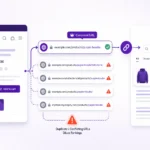
If an important URL needs to change, map the old URL to the most relevant new destination.
Google recommends creating an old-to-new URL mapping during site moves and implementing appropriate permanent redirects when URLs change.
Avoid sending unrelated old URLs to the homepage simply because it is convenient. Google specifically warns against irrelevant redirects that can confuse users and create soft-404-like situations.
Check the staging environment
A development or staging website should not accidentally become an indexable version of your website.
Before launch, verify that temporary crawl or indexing restrictions are handled correctly.
Google’s migration guidance specifically calls out forgotten noindex directives and robots.txt blocks as common problems during site moves.
How to Launch a New Website Without Losing SEO Progress
A redesign can change many elements that search engines already understand.
For example:
Old website
example.com/service-a/
New website
example.com/services/service-a/
That URL change is not automatically bad.
The problem occurs when the change happens without a plan.
A safe migration should consider:
- Existing URL inventory
- New URL structure
- URL-to-URL mapping
- Relevant redirects
- Internal links
- Canonical URLs
- XML sitemap
- Robots directives
- Content preservation
- Search Console monitoring
Google notes that significant site changes can cause temporary ranking fluctuations while Google recrawls and reindexes the changed URLs.
The goal is therefore not to avoid every fluctuation. It is to avoid preventable migration mistakes.
Website Development vs SEO: A Simple Decision Framework
Ask these five questions before deciding where to spend your next budget.
Question 1: Can customers use the website properly?
If no, fix the website experience first.
Question 2: Can search engines crawl and index important content?
If no, investigate technical SEO.
Question 3: Does the website have useful pages that match what customers search for?
If no, prioritize SEO and content strategy.
Question 4: Does the website attract visitors but fail to convert them?
If yes, investigate UX, messaging, offers, trust signals, and conversion paths.
Question 5: Is a redesign already planned?
If yes, involve SEO before the design and development decisions are finalized.
That last point is important.
You do not necessarily need to finish SEO before starting development. You need SEO involved early enough to influence development.
Frequently Asked Questions
Should I do SEO before building a website?
SEO research should ideally happen before or during the planning stage.
This allows search demand, site architecture, content requirements, URLs, and important pages to influence the website rather than forcing the SEO strategy to adapt to decisions that have already been made.
Should I redesign my website before SEO?
If the website has serious usability, functionality, technical, or structural problems, fixing those issues may need to come first.
But SEO should still be part of the redesign process from the beginning.
Can a website redesign hurt SEO?
Yes. A redesign can affect SEO when it changes URLs, content, internal links, navigation, templates, canonical signals, or indexability without proper planning.
Google’s site-migration documentation recommends preparing URL mappings, redirects, updated internal links, sitemaps, and other migration elements when URLs change.
Can SEO fix a badly designed website?
SEO can improve search visibility, but it cannot replace fundamental website functionality or a poor user experience.
If visitors cannot use the website effectively, increasing traffic may not solve the business problem.
Should SEO continue after the new website launches?
Yes.
SEO is not only a pre-launch activity. After launch, you need to monitor indexing, search performance, technical issues, content performance, and user behavior.
A launch provides a new baseline, not the end of the optimization process.
What if my website looks great but gets no organic traffic?
Start by investigating the SEO problem rather than automatically redesigning the website.
Review indexing, technical SEO, search intent, content quality, site architecture, internal links, and the queries for which your pages currently appear.
Final Takeaway
Website development and SEO should not be treated as competing investments.
Fix the problem that is currently preventing the website from performing, but make SEO part of the development process whenever the website is being built or redesigned.
If the website is broken or difficult to use, address those foundational problems.
If the website works but lacks search visibility, SEO may deserve priority.
If both need work, start with an audit, prioritize the highest-impact issues, and build the new website around both user needs and search requirements.
Most importantly, do not wait until a redesigned website goes live to think about SEO. Decisions about URLs, content, navigation, templates, internal links, and technical architecture can affect search performance long before launch.
The strongest approach is not website development versus SEO.
It is website development informed by SEO, followed by ongoing optimization based on real performance data.