
If you have ever searched for web hosting, GoDaddy is probably the first name that showed up. GoDaddy is hard to miss, and for good reason. It is the world’s largest domain registrar, managing over 82 million domains. But the real question is, is GoDaddy a good website host, or are you just paying for brand recognition? This review digs into the real numbers, real complaints, and real advantages so you can decide with confidence.
What Exactly Is GoDaddy? A Quick Background

GoDaddy started in 1997 as Jomax Technologies and rebranded by 1999. It became a household name partly because of its bold Super Bowl ads starting in 2005. Today, it serves more than 20 million customers worldwide and operates data centers in Phoenix, Los Angeles, Ashburn, Chicago, Singapore, and Amsterdam.
It is not just a hosting company anymore. GoDaddy offers shared hosting, WordPress hosting, VPS hosting, dedicated servers, email hosting, a website builder, SSL certificates, and domain registration, all under one roof. That one-stop-shop appeal is a big part of why people keep choosing it.
Is GoDaddy Reliable for Hosting Your Website?
Reliability is the one thing you cannot compromise on. If your site goes down, you lose visitors, revenue, and trust.
Independent monitoring tools consistently record GoDaddy’s uptime between 99.85% and 99.99%. That sits above the industry standard of 99.9%, which works out to less than four hours of downtime per year. For small to medium websites, that is a genuinely solid baseline.
GoDaddy’s Managed WordPress hosting performed particularly well in third-party tests run by Catchpoint throughout 2024. It ranked among the top performers in North America, Latin America, Europe, and even led competitors in India for average response time. So if WordPress is your platform of choice, GoDaddy’s managed tier has earned real credibility there.
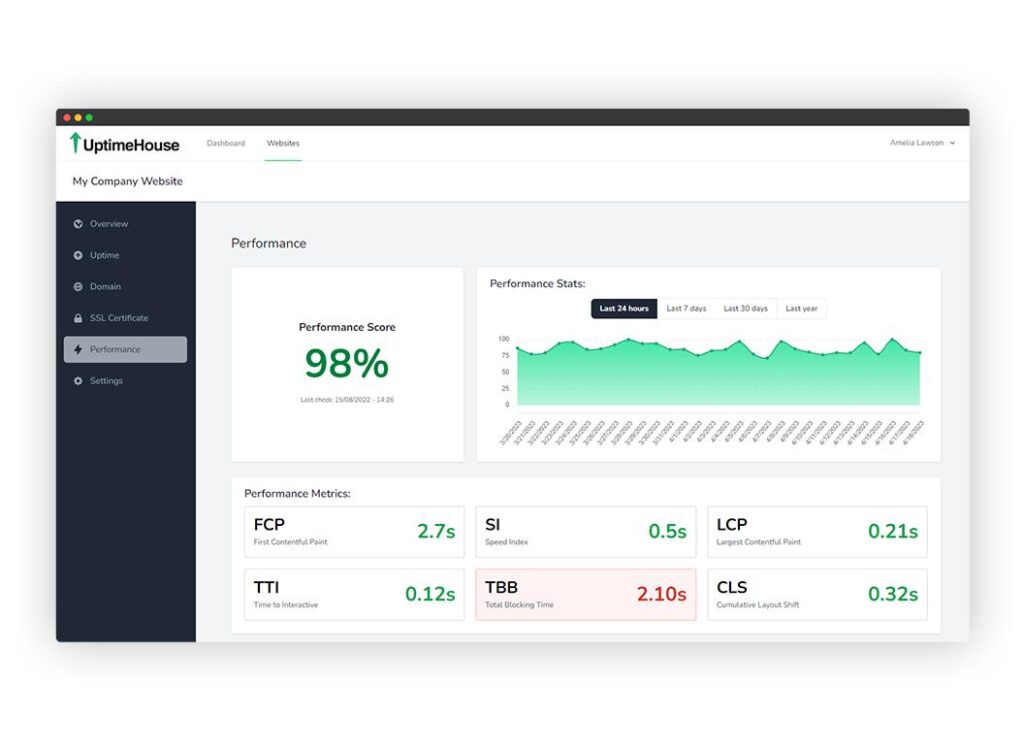
Speed is a slightly different story. On shared hosting, average page load times come in around 1.44 to 2.97 seconds depending on the test tool and configuration. The desktop Speed Index of 1.9 seconds actually beat Hostinger (3.2 seconds) and Bluehost (2.8 seconds) in one comparative test. Mobile performance, though, was rated low in PageSpeed Insights evaluations on content-heavy pages. That is something worth noting if your audience skews heavily mobile.



Is GoDaddy Good for Small Business Websites?
Short answer? Yes, with conditions.
GoDaddy’s shared hosting starts at around $5.99 per month, includes unlimited bandwidth, one-click WordPress installs, a free SSL certificate for the first year, and cPanel access. For a local business, a portfolio site, or a simple blog, that is a capable starter package.
The platform is genuinely beginner-friendly. The interface guides non-technical users through setup without requiring any coding knowledge. GoDaddy also offers over 125 free app integrations, including PayPal, making it easy to add basic ecommerce functionality to a small business site without calling in a developer.
However, if your site starts to grow and attract meaningful traffic, shared hosting limitations will show up. All shared hosting tiers cap at 30 concurrent MySQL connections regardless of which plan you are on. For a busy WooCommerce store or a news site with traffic spikes, that ceiling gets uncomfortable quickly.
Is GoDaddy Easy to Use for Non-Techies?
This is where GoDaddy genuinely shines. The dashboard is clean and navigable. Setting up a WordPress site takes minutes with one-click installation. The built-in drag-and-drop website builder (plans starting at $9.99 per month) lets complete beginners build a decent-looking site without touching a line of code.
GoDaddy also includes its AI-powered Airo tool with domain purchases. It helps with logo design, basic SEO suggestions, and marketing plans at no additional cost. For someone just getting started online, that is a meaningful head start.
Customer support is available 24/7 via phone, chat, and SMS on all plans. No premium tier required just to reach a real person. However, live chat has reportedly been inconsistent, with some review periods showing it as unavailable. Phone and text support have generally received better feedback for responsiveness.
GoDaddy Hosting Pros and Cons for Beginners
Here is the honest breakdown without sugarcoating it.
What works well:
- Strong uptime performance, consistently above industry standard
- Beginner-friendly setup with one-click installs and a guided dashboard
- Genuine one-stop shop: domain, hosting, email, SSL, and website builder in one place
- Managed WordPress hosting with impressive global performance benchmarks
- Free domain for the first year on annual plans
- 30-day money-back guarantee on most plans
What does not work as well:
- Shared hosting performance on mobile-heavy or high-traffic sites is below average
- No automatic backups on basic plans unless you purchase an add-on starting at around $3 per month
- Advanced features like staging environments and Git repositories are absent on lower tiers
- The checkout process involves multiple upsell prompts, which gets tedious fast
- Website migrations are not free; GoDaddy charges $99.99 to move an existing site to their servers


GoDaddy Hosting Renewal Prices Explained
Here is where many users get caught off guard, and you should not be one of them.
| Plan | Intro Price | Renewal Price |
|---|---|---|
| Economy | $5.99/mo | $11.99/mo |
| Deluxe | $7.99/mo | $14.99/mo |
| Ultimate | $12.99/mo | $19.99/mo |
| Maximum | $19.99/mo | $24.99/mo |
Quick takeaway: GoDaddy renewal pricing is usually 2×–3× higher than the first-year promotional price, so always calculate long-term cost before buying.
GoDaddy vs Bluehost for WordPress: Which One Wins?
Both are popular choices for WordPress, but they target slightly different users.
| Feature | GoDaddy | Bluehost |
|---|---|---|
| Best For | Small business sites | WordPress blogs |
| WordPress Friendly | Good | Better |
| Speed | Good | Better |
| Free Migration | Paid | Free |
| Free SSL | Limited | Included |
| Ease of Use | Very Easy | Easy |
| Pricing | Higher renewals | Better value |
| Security | Add-ons needed | More included |
| Winner | Good for beginners | Better for WordPress |
For pure WordPress performance, GoDaddy’s managed tier has a real edge. For overall value and feature completeness at entry-level pricing, Bluehost competes strongly. If you are on a tight budget and need migrations and security tools bundled in from day one, Bluehost edges ahead. If performance and uptime on WordPress are your top priorities, GoDaddy’s managed offering earns the nod.
Is GoDaddy Reliable for Ecommerce?
For small ecommerce operations, GoDaddy can work. The PayPal integration is smooth, WooCommerce is supported on higher WordPress tiers, and the uptime reliability keeps your store accessible.
That said, basic plans lack DDoS protection and advanced security features. Malware scanning is only free for the first month, after which you need to purchase a security package starting at $6.99 per month. For a store handling customer payment data, those are not optional extras. They are baseline requirements.
The 30 concurrent MySQL connection cap on all shared hosting tiers is another real concern for ecommerce growth. A site experiencing a traffic surge during a sale or seasonal event can hit that limit and cause errors at exactly the wrong moment.
For serious ecommerce, moving up to GoDaddy’s VPS hosting or Managed WordPress Ultimate plan is the more sensible path. At that level, the performance and security story improves considerably.


Cheapest GoDaddy Hosting Alternatives Worth Considering
If GoDaddy’s renewal pricing feels too steep, these alternatives are worth a genuine look.
Hostinger consistently offers lower base prices, faster load speeds in many test comparisons, and DDoS protection bundled into base plans. SiteGround is well-regarded for WordPress performance and managed support, though it is priced at a higher tier. Namecheap offers transparent, flat-rate domain pricing without the renewal shock GoDaddy is known for. A2 Hosting boasts a 99.98% uptime record and strong speed performance on its higher-tier plans.
None of these alternatives are perfect either. Every host has trade-offs. The key is matching the host to your specific needs rather than defaulting to the biggest brand name in the room.
Frequently Asked Questions
Does GoDaddy hosting price increase after the first year?
Yes, significantly. GoDaddy’s introductory pricing can roughly double at renewal. The Economy plan starts at $5.99/month but renews at $11.99/month. Always calculate the full renewal cost before committing to any plan.
Is GoDaddy good for WordPress websites?
Yes, especially on its Managed WordPress plans. Independent benchmarks by Catchpoint in 2024 showed GoDaddy’s Managed WordPress hosting ranked among the fastest globally, including top positions in North America, Europe, and India.
What is GoDaddy’s uptime guarantee?
GoDaddy guarantees 99.9% uptime. Independent monitoring tools have recorded actual uptime between 99.85% and 99.99%, which is above the industry standard and translates to less than four hours of potential downtime per year.
Is GoDaddy good for small business websites?
Yes, for simple to mid-level business sites. GoDaddy offers 125+ app integrations, PayPal connectivity, a website builder, and reliable uptime. However, heavy ecommerce stores with high traffic may outgrow shared hosting limits quickly.
Is GoDaddy or Bluehost better for WordPress?
GoDaddy’s Managed WordPress hosting is faster in independent benchmarks. Bluehost includes a free CDN, DDoS protection, and free migrations on base plans. GoDaddy wins on performance; Bluehost wins on features included at entry-level pricing.
Does GoDaddy offer free SSL?
Yes, but only for the first year on the Economy plan. From year two, SSL renews at $119.99 per year on that plan. All higher-tier plans (Deluxe and above) include free SSL permanently.
Can I migrate my existing website to GoDaddy?
Yes, but it is not free. GoDaddy charges $99.99 for website migrations. Competitors like HostPapa and Bluehost offer free migrations. Factor this cost in if you are switching from another host.
Is GoDaddy reliable for ecommerce?
For small ecommerce sites, yes. GoDaddy supports WooCommerce, PayPal, and multiple sales channels. However, its base plans lack DDoS protection and cap MySQL connections at 30, which can limit performance for high-traffic online stores.
What are the best alternatives to GoDaddy hosting?
The strongest alternatives are Hostinger (cheaper with better base security), SiteGround (premium WordPress performance), Bluehost (best value for WordPress beginners), and Namecheap (transparent domain pricing without renewal shock).
So, Is GoDaddy a Good Website Host?
GoDaddy is a solid, established host with real strengths: strong uptime, excellent Managed WordPress performance, beginner-friendly tools, and the convenience of managing everything from one platform. If you are building your first website, running a small business site, or want domain and hosting under one login, it delivers on those fronts without asking you to learn anything complicated.
The weaknesses are equally real: renewal prices that can double your costs, aggressive upselling at checkout, missing features like free migrations and advanced security on base plans, and limited performance on mobile-heavy traffic.
Is it the best hosting option in the market right now? Probably not for every use case. But is GoDaddy a good website host for beginners, small businesses, and WordPress users who value simplicity and reliability? Yes, with eyes open about the long-term pricing. Read the renewal terms before you sign up, calculate your total three-year cost, and you will be making an informed decision rather than a regrettable one.