How the 7 Cs of Digital Marketing Can Boost Your Conversions
Imagine setting up a shop where people walk in, look around, and then leave without buying anything. Frustrating, right? The same thing happens online-thousands of businesses get visitors, but only a few manage to turn them into paying customers.
If your digital marketing strategy isn’t working, chances are you’re missing something important. That’s where the 7 Cs of digital marketing come in-they hold the key to turning curious visitors into loyal customers.
Most businesses focus on bringing traffic to their website but forget what really matters: conversions. It’s not just about getting attention; it’s about keeping it, building trust, and making people take action.
Think about brands like Amazon and Netflix-why do people keep coming back? They use a smart, structured approach that keeps customers engaged at every step. And guess what? You can do the same with the 7 Cs.
So, what exactly are these 7 Cs, and how can they transform your strategy? In this blog, we’ll break them down one by one, showing you how to attract, engage, and convert customers more effectively. Let’s get started!
7 Cs of Digital Marketing

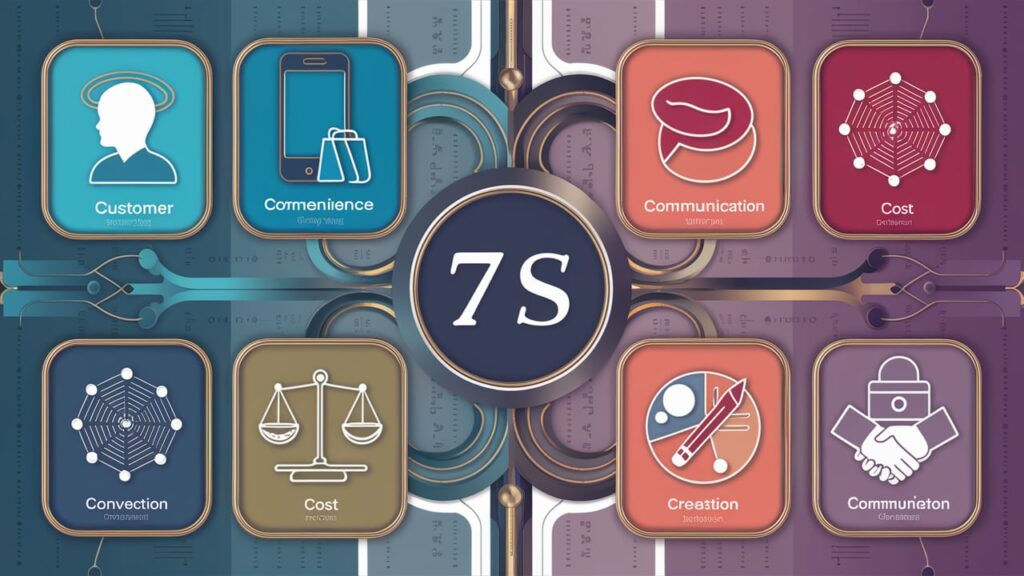
Before diving into each element in detail, let’s take a quick look at what the 7 Cs are:
- Customer – Knowing who your audience is and what they need.
- Content – Providing valuable and relevant information to attract and engage.
- Context – Delivering the right message at the right time.
- Community – Building trust and loyalty through engagement.
- Convenience – Ensuring a smooth user experience across all platforms.
- Cohesion – Keeping marketing efforts consistent and aligned.
- Conversion – Turning leads into paying customers.
Each of these elements plays a crucial role in a brand’s success. Now, let’s dive into the each phase.
The 7 Cs in Action: How They Shape a Winning Strategy
1. Customer: Understanding Your Audience

If you don’t know who your customers are, how can you sell to them? Understanding your audience is the foundation of every successful digital marketing strategy. If you skip this step, even the best content or ads won’t bring results.
Why Knowing Your Audience Matters
Imagine trying to sell luxury watches to teenagers or gaming laptops to retired professionals. No matter how great your product is, if it’s reaching the wrong people, it won’t convert into sales.
When you understand your audience, you can:
✔ Create content that speaks to their needs.
✔ Run better ads by targeting the right people.
✔ Offer products/services that solve their problems.
✔ Increase engagement because your message resonates.
How to Identify Your Target Audience
To truly understand your customers, ask yourself:
1️⃣ Who are they? (Age, gender, income, location)
2️⃣ What are their biggest problems? (What challenges do they face?)
3️⃣ Where do they spend time online? (Social media, search engines, forums)
4️⃣ What influences their buying decisions? (Reviews, discounts, brand trust)
5️⃣ How do they consume content? (Videos, blogs, podcasts, social media)
For example, if you’re running a fitness brand for busy professionals, your ideal customer might be:
- Age: 25-40 years old
- Location: Urban areas
- Problem: No time for long workouts
- Preferred Content: Quick fitness tips on Instagram & YouTube
- Buying Factor: Easy-to-follow workout plans
By answering these questions, you can tailor your marketing strategy to meet customer needs more effectively.
Where to Find Customer Insights
✅ Google Analytics – See website visitor data (age, location, behavior).
✅ Social Media Insights – Platforms like Facebook, Instagram, and LinkedIn provide demographic and interest-based data.
✅ Customer Surveys & Feedback – Ask existing customers what they need.
✅ Competitor Research – Check who engages with similar brands.
✅ Forums & Online Communities – Look at common discussions on Reddit, Quora, and Facebook groups.
A business that truly understands its audience can deliver better content, ads, and products-leading to higher engagement and more conversions. Before you launch any campaign, take the time to study your customers, listen to their needs, and provide value that truly helps them.
2. Content: Creating Value That Engages

Once you understand your audience, the next step is to create content that grabs their attention and keeps them engaged. Without valuable content, even the best marketing strategy will struggle to convert visitors into customers.
Why Content Matters
Imagine you visit a website looking for tips on boosting website traffic, but all you find is generic advice with no real insights. You’d probably leave and look elsewhere, right?
Your audience expects useful, engaging, and relevant content that helps them solve a problem, learn something new, or make a decision. When done right, content can:
✔ Attract the right audience through search engines and social media.
✔ Build trust and authority, making your brand a go-to resource.
✔ Encourage engagement, leading to more shares, comments, and discussions.
✔ Guide customers toward a purchase without being overly salesy.
Types of Content That Work Best
Not all content is created equal. Different formats work for different audiences. Here are some high-performing content types:
1️⃣ Blog Posts & Articles
- Perfect for SEO and driving organic traffic.
- Example: “10 Proven Ways to Increase Your Website Traffic”
2️⃣ Videos & Tutorials
- Great for platforms like YouTube, Instagram Reels, and TikTok.
- Example: A 2-minute explainer video on how to use a tool.
3️⃣ Social Media Posts
- Helps with brand awareness and engagement.
- Example: Instagram carousel with step-by-step marketing tips.
4️⃣ Infographics & Visual Content
- Makes complex information easy to digest.
- Example: “The Ultimate Guide to SEO in One Image.”
5️⃣ Email Newsletters
- Keeps customers updated and nurtures leads.
- Example: A weekly email with exclusive marketing tips.
How to Create Content That Converts
✅ Solve Problems – Always ask: “What does my audience need?” If your content isn’t useful, people won’t engage.
✅ Make It Engaging – Use a conversational tone, add visuals, and keep it easy to read.
✅ Use SEO Best Practices – Optimize your content with keywords, headers, and internal links for better search rankings.
✅ Encourage Action – Add a Call-to-Action (CTA) like: “Try this strategy today!” or “Sign up for a free trial!”
Content is the fuel that drives digital marketing success. It’s not just about posting regularly-it’s about creating something valuable that your audience wants to read, watch, or share. The better your content, the stronger your brand and conversions will be! 🚀
3. Context: Reaching the Right Audience at the Right Time

Creating great content is important, but it won’t be effective if it reaches the wrong people or appears at the wrong time. Context is about ensuring your message is delivered to the right audience, in the right format, and at the right moment.
Why Context Matters
Imagine getting an ad for winter jackets in the middle of summer. You wouldn’t be interested, right? That’s what happens when brands ignore context-they push content without considering when, where, and how people will engage with it.
When marketing messages align with audience needs and timing, they feel natural rather than forced. This improves:
✔ Engagement – People interact with content that feels relevant to them.
✔ Conversions – Timely offers increase the likelihood of action.
✔ User Experience – A well-placed message makes the customer journey smoother.
Key Factors That Define Context in Digital Marketing
1️⃣ Audience Behavior & Preferences
- What platform do they use? (Facebook, Instagram, LinkedIn, YouTube)
- When are they most active? (Morning, lunch break, evening)
- What content format do they prefer? (Videos, articles, infographics)
💡 Example: If your audience is working professionals, posting on LinkedIn during lunch breaks may get better engagement than late at night.
2️⃣ Timing & Seasonality
- Is there a seasonal demand for your product? (Black Friday, Christmas sales)
- Are there trending topics in your industry?
💡 Example: Promoting online courses in January (when people set New Year’s goals) can lead to more sign-ups than in December.
3️⃣ Customer Journey Stage
Every customer goes through three key stages before making a purchase:
- Awareness – They realize they have a problem.
- Consideration – They compare different solutions.
- Decision – They are ready to buy.
💡 Example:
- A blog post like “What is SEO?” is great for the Awareness stage.
- A comparison article like “SEMrush vs. Ahrefs” works for the Consideration stage.
- A limited-time discount on an SEO tool is perfect for the Decision stage.
How to Use Context Effectively
✅ Analyze Audience Data – Use tools like Google Analytics and Facebook Insights to see when and where users engage most.
✅ Personalize Content – Send targeted emails based on customer behavior (e.g., abandoned cart reminders).
✅ Optimize for Platforms – Short-form content works on Instagram, while long-form performs well on blogs and YouTube.
✅ Use Automation – Schedule content based on audience activity with tools like Hootsuite and Buffer.
A great marketing strategy isn’t just about what you say-it’s also about when and where you say it. When you match your content with the right audience at the perfect time, you increase engagement, trust, and conversions.
Want to get better results? Start thinking beyond content-focus on context too! 🚀
4. Community: Building Trust and Engagement

Customers don’t just buy products; they connect with brands they trust. A strong community makes your brand more than just a business-it creates a loyal group of followers who engage, share, and advocate for you.
Why Community Matters
Imagine you’re choosing between two brands:
- One has thousands of happy customers talking about it online.
- The other has no reviews, no engagement, and no visible audience.
Which one would you trust more? Most people go with the brand that has a strong, engaged community.
When you build a loyal community, you gain:
✔ Brand Advocates – Happy customers promote your brand for free.
✔ Higher Engagement – People comment, share, and interact with your content.
✔ Increased Conversions – Trust leads to more sales.
How to Build an Engaged Community
1️⃣ Social Media Engagement
- Reply to comments and messages quickly.
- Ask questions, run polls, and create interactive content.
- Host live Q&A sessions on Facebook, Instagram, or YouTube.
💡 Example: Brands like Nike and Starbucks regularly respond to customers and share user-generated content, strengthening their brand community.
2️⃣ Encourage User-Generated Content (UGC)
People trust recommendations from other customers more than brand ads. Encourage users to share their experiences.
Ways to do this:
✅ Run hashtag campaigns (e.g., “#MyFitnessJourney” for a fitness brand).
✅ Feature customer photos and testimonials on your website and social media.
✅ Offer rewards or discounts for sharing content.
💡 Example: GoPro built a massive community by sharing user videos, making customers feel like a part of the brand.
3️⃣ Create Exclusive Groups or Forums
A private community gives customers a space to interact with you and each other.
✅ Facebook Groups – Build a niche audience around your industry.
✅ Discord/Slack Channels – Great for in-depth discussions.
✅ VIP Memberships – Offer exclusive content or early product access.
💡 Example: Many brands create Facebook groups where customers can ask questions, share tips, and connect with others.
4️⃣ Personalize Interactions
People want to feel valued, not like another number. Personalized interactions help build deeper connections.
✅ Use customer names in emails and social media replies.
✅ Send thank-you messages after purchases.
✅ Recognize loyal customers with shoutouts or special offers.
💡 Example: Airbnb sends personalized recommendations based on customer preferences, making users feel special.
How to Maintain a Strong Community
✔ Be Authentic – People connect with real brands, not corporate robots.
✔ Stay Consistent – Regular engagement keeps the community alive.
✔ Provide Value – Give tips, exclusive deals, and meaningful content.
✔ Encourage Discussions – Let the audience share their thoughts and ideas.
A brand with a loyal community doesn’t just sell-it creates a movement. The stronger your community, the more trust, engagement, and conversions you’ll get.
Want to grow faster? Start engaging, responding, and making your audience feel like they’re part of something bigger! 🚀
5. Convenience: Making the Buying Process Effortless

If your audience has to struggle to navigate your website, find information, or complete a purchase, they’ll leave. Convenience is about making the entire experience-from discovering your brand to completing a transaction-as easy as possible.
Why Convenience Matters
Think about the last time you abandoned an online purchase. Maybe the website was slow, the checkout process was too complicated, or the payment options were limited. Customers don’t have time for frustration-they want a smooth, hassle-free experience.
A seamless experience leads to:
✔ Higher Conversions – Fewer obstacles mean more completed purchases.
✔ Increased Customer Loyalty – People return to brands that make shopping easy.
✔ Better Brand Reputation – Customers recommend businesses that value their time.
How to Make Your Business More Convenient
1️⃣ Optimize Your Website for Speed
- A slow website kills conversions. 53% of users leave if a site takes more than 3 seconds to load.
- Use Google PageSpeed Insights to check and improve your speed.
- Optimize images, enable caching, and choose a reliable hosting provider.
💡 Example: Amazon’s fast-loading pages and 1-click checkout keep customers coming back.
2️⃣ Mobile-Friendly Experience
More than 60% of online traffic comes from mobile devices. If your site isn’t mobile-friendly, you’re losing customers.
✔ Use responsive design so the site looks great on all screens.
✔ Ensure buttons are easy to tap and text is readable.
✔ Test your website using Google’s Mobile-Friendly Test.
💡 Example: Apple’s website is fully optimized for mobile, making it easy to browse and buy products.
3️⃣ Simplify the Checkout Process
A complicated checkout is one of the biggest reasons for cart abandonment.
✔ Offer guest checkout (don’t force account creation).
✔ Minimize form fields (ask only for essential details).
✔ Provide multiple payment options (credit cards, PayPal, UPI, wallets).
💡 Example: Shopify stores with a one-page checkout see higher conversion rates.
4️⃣ Clear Navigation & Easy Access to Information
Customers shouldn’t have to dig through your website to find what they need.
✔ Use a clean, intuitive menu structure.
✔ Include a search bar for quick access to products or articles.
✔ Add a FAQ page to answer common questions.
💡 Example: Netflix makes it effortless for users to sign up, browse, and watch without confusion.
5️⃣ Fast & Reliable Customer Support
When customers have questions, they expect quick answers.
✔ Use live chat for instant support.
✔ Offer self-help resources like FAQs and tutorials.
✔ Provide multiple support options (chat, email, phone).
💡 Example: Zappos built a strong reputation by offering exceptional customer support with fast response times.
How to Measure & Improve Convenience
✅ Analyze Drop-Off Points – Check where users leave your site (Google Analytics can help).
✅ Test Your Website – Browse your site like a customer to find pain points.
✅ Collect Feedback – Ask customers what could be improved.
A smooth, hassle-free experience keeps customers engaged and coming back. The easier it is for them to browse, buy, and interact with your brand, the higher your success rate.
Want better conversions? Make your business as convenient as possible! 🚀
6. Cohesion: Keeping Your Brand Message Consistent

Have you ever visited a website, then checked the brand’s social media, and felt like they were two completely different companies? That’s a lack of cohesion-and it confuses customers. Cohesion is about ensuring your brand looks, feels, and sounds the same across all platforms.
Why Cohesion Matters
Imagine you’re shopping online and see an Instagram ad for a sleek, modern clothing brand. You click the link, but the website looks outdated, has a different logo, and the messaging feels off. Would you trust the brand? Probably not.
Consistent branding helps in:
✔ Building trust – People recognize and remember consistent brands.
✔ Improving engagement – A unified voice makes customers feel connected.
✔ Increasing conversions – Customers are more likely to buy when everything feels familiar.
How to Maintain Brand Cohesion
1️⃣ Keep Visual Identity the Same Everywhere
Your brand’s logo, colors, fonts, and design style should be the same across:
- Website
- Social media (Instagram, Facebook, LinkedIn, etc.)
- Email newsletters
- Ads and landing pages
💡 Example: Coca-Cola uses the same red-and-white color scheme and classic font everywhere, making it instantly recognizable.
2️⃣ Use a Consistent Tone & Voice
The way you communicate should feel the same across all channels.
- If your brand is friendly and casual, avoid corporate-sounding emails.
- If you’re targeting professionals, keep your messaging clear and authoritative.
💡 Example: Nike always uses inspiring and motivational language in ads, social media, and website content.
3️⃣ Align Your Messaging Across Platforms
Your brand’s message should be the same everywhere, whether it’s a blog post, an ad, or a social media post.
- If your website says, “We help businesses grow with SEO,”
- Your Facebook bio shouldn’t say, “We specialize in social media marketing.”
💡 Example: Apple’s messaging across ads, website, and packaging focuses on simplicity, innovation, and premium quality.
4️⃣ Make Sure Your Customer Experience Feels Seamless
A customer should feel no difference whether they interact with your brand via:
- A website live chat
- An Instagram DM
- An email reply
💡 Example: Amazon provides a seamless shopping experience across mobile, desktop, and app-so customers can pick up where they left off, anytime.
How to Ensure Brand Cohesion
✅ Create a Brand Style Guide – Define your brand colors, fonts, tone, and messaging guidelines.
✅ Use the Same Social Media Handles – Keep your username the same across platforms.
✅ Train Your Team – Make sure everyone (marketers, customer support, designers) follows the same branding rules.
✅ Review & Update Regularly – Check for inconsistencies and make improvements.
Brand cohesion is what makes your business feel professional, trustworthy, and memorable. If you keep your visuals, messaging, and experience consistent across all platforms, your audience will trust you more-and trust leads to conversions.
Want to build a strong brand? Start by making every customer interaction feel the same! 🚀
7. Conversion: Turning Visitors into Customers

Attracting visitors is great, but if they don’t take action, your marketing efforts go to waste. Conversion is the final and most crucial step in digital marketing-it’s where potential customers become paying customers.
Why Conversion Matters
Imagine running ads that bring 10,000 visitors to your website, but only 10 people buy something. That’s a low conversion rate, and it means your business is losing money.
A high conversion rate means:
✔ More sales with the same traffic – No need to spend extra on ads.
✔ Better return on investment (ROI) – You get more value from marketing efforts.
✔ Higher customer engagement – Users take meaningful actions, like signing up or purchasing.
How to Increase Conversions
1️⃣ Use Clear & Strong Calls-to-Action (CTAs)
A CTA tells visitors exactly what to do next. Without a clear action step, they may leave without engaging.
💡 Examples of High-Converting CTAs:
✔ “Get Your Free Trial Now” (Encourages sign-ups)
✔ “Claim Your 50% Discount” (Creates urgency)
✔ “Shop Best Deals Today” (Boosts sales)
Make sure CTAs are:
✅ Visible and easy to find
✅ Action-oriented (Use words like Get, Try, Start, Claim)
✅ Placed above the fold (so users see them without scrolling)
2️⃣ Build Trust with Social Proof
People trust what others say about your business more than what you say about it. Adding social proof increases confidence and boosts conversions.
💡 Ways to Add Social Proof:
✔ Customer Reviews & Testimonials – Show positive feedback.
✔ Case Studies – Highlight real success stories.
✔ Trust Badges – Display “Money-Back Guarantee” or “Secure Checkout” symbols.
🔹 Example: Amazon increases conversions by showing verified customer reviews and star ratings on every product page.
3️⃣ Reduce Friction in the Buying Process
The easier it is to complete a purchase or sign up, the higher your conversion rate.
✅ Offer Guest Checkout – Don’t force users to create an account.
✅ Minimize Form Fields – Ask for only essential details.
✅ Provide Multiple Payment Options – Credit/debit cards, PayPal, UPI, and wallets.
🔹 Example: Shopify stores with one-click checkout see higher conversions because customers can complete purchases instantly.
4️⃣ Create a Sense of Urgency
If visitors feel like they can come back later, they may never return. Adding urgency can push them to take action now.
💡 Ways to Create Urgency:
✔ Limited-Time Offers – “50% off – Only for 24 Hours!”
✔ Low Stock Alerts – “Only 3 items left in stock!”
✔ Countdown Timers – “Deal ends in 1 hour!”
🔹 Example: Booking.com uses “Only 2 rooms left!” alerts to increase hotel bookings.
5️⃣ Retarget Visitors Who Didn’t Convert
Not everyone buys on their first visit. Retargeting reminds them of your product and brings them back.
✅ Facebook & Google Retargeting Ads – Show ads to visitors who left your site.
✅ Email Follow-Ups – Send abandoned cart reminders.
✅ Push Notifications – Use pop-ups to bring back users.
🔹 Example: Ever left something in your Amazon cart? They email you a reminder to complete your purchase-this increases conversions.
How to Track & Improve Conversions
📊 Google Analytics – Track conversion rates and drop-off points.
🎯 A/B Testing – Test different headlines, CTAs, and page layouts.
📈 Heatmaps (Hotjar, Crazy Egg) – See where users click most and optimize.
A marketing strategy is incomplete without conversion optimization. You don’t just want visitors-you want customers! By improving your CTAs, reducing friction, adding trust elements, and using urgency, you can turn more visitors into buyers.
Want more conversions? Make it easy, build trust, and create urgency! 🚀


Case Studies: Brands That Have Mastered the 7 Cs
1. Airbnb – Building a Strong Community
Airbnb transformed travel by focusing on community. Their user-generated content, host reviews, and interactive platform build trust and encourage bookings.
2. Amazon – Prioritizing Convenience
With one-click purchasing, personalized recommendations, and fast delivery, Amazon sets the gold standard for customer convenience.
Both brands integrate all 7 Cs, proving how powerful this strategy can be.
Implementing the 7 Cs in Your Marketing Plan
Want to apply the 7 Cs to your business? Here’s where to start:
✔ Analyze Your Audience: Use surveys, social media, and analytics to understand their needs.
✔ Create Engaging Content: Focus on helpful, relevant, and easy-to-digest material.
✔ Ensure Seamless User Experience: Make navigation, checkout, and support hassle-free.
✔ Engage with Your Community: Respond, interact, and encourage customer participation.
✔ Stay Consistent: Align your brand message across all platforms.
Even small changes can lead to big improvements in conversions.
Final Thoughts
Digital marketing doesn’t have to be complicated. By focusing on the 7 Cs-Customer, Content, Context, Community, Convenience, Cohesion, and Conversion-you create a well-rounded strategy that attracts, engages, and converts customers.
Whether you’re just starting or looking to refine your approach, applying these principles will help your business grow. Take the first step today-analyze your current marketing efforts, identify gaps, and start implementing the 7 Cs for better results.
Want to see real improvements? Start with one C at a time and track your progress. The journey from customer to conversion is all about the right strategy-and now, you have the blueprint to make it happen. 🚀
You may also like: