Digital marketing can feel like a giant puzzle. You have SEO, content, social media, email, paid advertising, analytics, and more. The tricky part is making all these pieces work together instead of letting every channel do its own thing.
That is where the 7 Cs of Digital Marketing can help.
The 7 Cs framework provides a simple way to think about digital marketing from the customer’s perspective. It focuses on understanding your audience, creating useful content, delivering relevant experiences, building relationships, making interactions convenient, keeping your marketing consistent, and ultimately turning interest into action.
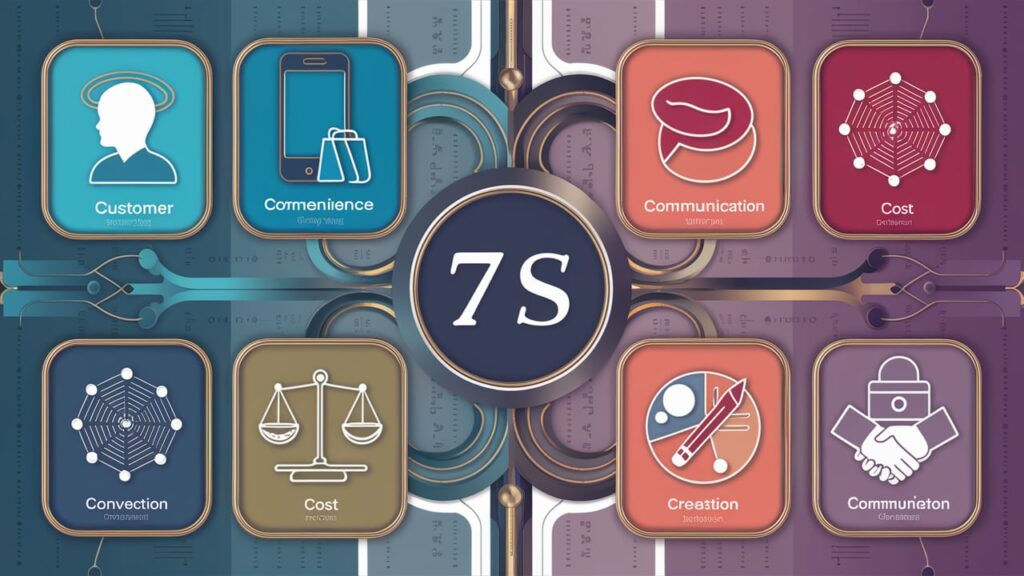
The seven Cs are:
- Customer – Knowing who your audience is and what they need.
- Content – Providing valuable and relevant information to attract and engage.
- Context – Delivering the right message at the right time.
- Community – Building trust and loyalty through engagement.
- Convenience – Ensuring a smooth user experience across platforms.
- Cohesion – Keeping marketing efforts consistent and aligned.
- Conversion – Turning leads into paying customers.
These principles work together. You can create excellent content, but if it reaches the wrong audience, it may achieve little. You can attract thousands of visitors, but if your website is difficult to use, those visitors may leave without taking action.
In other words, digital marketing is not simply about getting attention. It is about knowing who you want to reach, what they need, how you communicate with them, and how you help them take the next step.
Let’s look at each of the 7 Cs in detail.
7 Cs of Digital Marketing

The 7 Cs of Digital Marketing are a customer-focused framework that helps businesses organize their digital marketing strategy around the customer journey.
Unlike a channel-first approach that starts with questions such as “Should we run Google Ads?” or “Should we post on Instagram?”, the 7 Cs encourage marketers to start with the customer.
That shift matters.
A business might have an impressive website, a busy social media account, and a large content library. However, if none of these efforts address what customers actually want, the marketing strategy can miss the mark.
The 7 Cs help connect different parts of digital marketing:
Customer → Content → Context → Community → Convenience → Cohesion → Conversion
Think of this as a journey rather than seven isolated boxes. You understand the customer, create content for them, provide it in the right context, build relationships, make the experience easy, connect your marketing activities, and guide the customer toward conversion.
Now, let’s break down each principle.
The 7 Cs in Action: How They Shape a Winning Strategy



1. Customer: Know Who You Are Marketing To

Everything starts with the Customer.
Before creating a blog post, launching an advertising campaign, or designing a social media strategy, you need to understand the people you want to reach.
That means going beyond basic demographics.
You need to understand their needs, problems, questions, motivations, and decision-making process.
For example, imagine an online jewelry store selling engagement rings.
A customer searching for “how to choose an engagement ring” may still be researching. Someone searching for “2 carat lab grown diamond engagement ring” may have a much stronger purchase intent.
Both users may eventually buy a ring, but they are not at the same stage of the journey.
Their needs differ.
The first person may need educational content about diamond shapes, the 4Cs, and ring settings. The second may need product comparisons, certification information, pricing, and shipping details.
A strong digital marketing strategy recognizes these differences.
How to Understand Your Customer
Businesses can use several sources to understand their audiences, including:
- Customer feedback
- Website analytics
- Search queries
- Social media interactions
- Customer service questions
- Reviews
- Surveys
- Sales data
- Competitor research
Google also recommends creating helpful, reliable, people-first content rather than producing content solely to attract search engine traffic. That principle fits naturally with the Customer element because useful content starts with understanding what people actually need.
Why Customer Comes First
When you understand your customer, you can make better decisions about everything else.
You can create more relevant content.
You can choose better marketing channels.
You can improve your website experience.
You can write clearer calls to action.
You can answer questions before customers even ask them.
The simple rule is:
Don’t start with “What do we want to sell?” Start with “What does our customer need?”
That small change can completely reshape your marketing strategy.
2. Content: Give People a Reason to Pay Attention

Once you understand your customer, the next step is Content.
Content is one of the main ways businesses communicate with potential and existing customers online. It can include:
- Blog articles
- Product descriptions
- Videos
- Guides
- Case studies
- Email newsletters
- Social media posts
- Infographics
- FAQs
- Buying guides
However, creating content is not the same as creating useful content.
The internet already has enough articles that say, “Top 10 Tips You Need to Know!” followed by ten paragraphs that somehow tell you very little.
Your goal should be to provide genuine value.
What Makes Content Valuable?
Useful content should answer a real question, solve a problem, explain something clearly, or help someone make a decision.
For example, a jewelry website could create an article explaining:
- How diamond grading works
- The difference between lab-grown and natural diamonds
- How to choose a diamond shape
- How to clean an engagement ring
- What to consider before buying a wedding band
These topics help customers make informed decisions.
The content does not need to shout, “Buy from us!” in every paragraph. Sometimes, simply answering the customer’s question well is the smarter marketing move.
Google’s guidance on creating helpful content emphasizes content that provides a satisfying experience for users and demonstrates appropriate expertise and trustworthiness.
Content Should Match the Customer Journey
Not every visitor wants the same thing.
A person at the awareness stage may want educational information.
A person at the consideration stage may compare different products or services.
A person at the decision stage may want pricing, reviews, guarantees, delivery information, or a clear way to purchase.
Your content strategy should support these different needs.
That means you should not treat every piece of content as a sales pitch.
Sometimes the best content simply helps.
And yes, that can still be good marketing.
3. Context: Say the Right Thing at the Right Moment

Context is about understanding the situation surrounding the customer.
The same message can have very different results depending on when, where, and how you deliver it.
Imagine someone searching Google for “best engagement ring for a healthcare professional.”
They may be looking for something practical, comfortable, and suitable for everyday work.
Now imagine someone searching for “luxury 5 carat diamond engagement ring.”
These users have very different expectations.
The first person may care about durability and comfort.
The second may focus more on size, quality, design, and investment considerations.
A one-size-fits-all message may not work equally well for both.
Context Includes More Than Timing
Context can involve:
- Search intent
- Customer journey stage
- Device
- Location
- Previous interactions
- Content topic
- Buying intent
- Customer needs
For SEO, search intent plays a particularly important role.
Someone searching “what is a solitaire engagement ring?” is likely looking for an explanation.
Someone searching “buy solitaire engagement ring” shows stronger commercial intent.
Both searches relate to the same general topic, but the context differs.
Your content should reflect that difference.
Why Context Matters in Digital Marketing
Good marketing does not simply ask, “What do we want to say?”
It also asks:
“Is this the right message for this person at this moment?”
A detailed 2,000-word guide might work well for someone researching a purchase. It may not work as well for someone who simply wants a quick answer.
Likewise, a promotional email sent at the wrong time can feel intrusive rather than helpful.
Context helps you make your marketing more relevant.


4. Community: Build Relationships, Not Just Reach

Digital marketing often focuses heavily on traffic, impressions, clicks, and followers.
But numbers alone do not create relationships.
That is where Community comes in.
A community is built when people feel connected to a brand, its values, or other customers around a shared interest.
For businesses, community building can happen through:
- Social media conversations
- Online groups
- Customer reviews
- User-generated content
- Email communities
- Events
- Educational content
- Customer discussions
The goal is not simply to collect followers.
It is to encourage meaningful interaction.
For example, a jewelry brand could encourage customers to share proposal stories, wedding photos, or styling ideas. A software company might build a community where users exchange advice and solutions.
These activities can help people feel that they are part of something rather than simply being treated as another sales opportunity.
Trust Takes More Than a Logo
Customers often want to know whether a business is credible before they buy.
That is why reviews, testimonials, transparent information, helpful customer support, and genuine engagement matter.
Google’s Search Quality Evaluator Guidelines place strong emphasis on aspects such as experience, expertise, authoritativeness, and trustworthiness when evaluating the quality of content and websites.
Community can support that trust by giving potential customers more evidence that real people interact with and value the brand.
However, community building does not happen overnight.
You cannot post three times, receive four likes, and declare, “Excellent. Community achieved.”
It takes consistent participation, useful communication, and genuine attention to customers.
5. Convenience: Make the Customer Journey Easy

The fifth C is Convenience.
You can have excellent content, a strong community, and a well-designed marketing strategy. But if customers struggle to navigate your website, find information, or complete a purchase, all that effort can lose momentum.
Convenience means making it easy for people to interact with your business.
That includes the entire customer experience, from the first visit to the final purchase and beyond.
A convenient digital experience should help users:
- Find information quickly
- Navigate websites easily
- Search for products or services
- Compare available options
- Understand pricing and policies
- Contact customer support
- Complete purchases without unnecessary friction
- Use the website across different devices
Convenience Is About Removing Friction
Imagine a customer finds the perfect product but cannot understand how much it costs.
Or they want to buy something but have to create an account before they can even see basic information.
Or they reach the checkout page and discover unexpected costs at the last step.
These experiences can create friction.
The customer may simply leave.
Google’s Core Web Vitals guidance highlights the importance of user experience, including loading performance, responsiveness, and visual stability. These factors form part of Google’s page experience considerations, although strong page experience alone does not guarantee high search rankings.
The lesson is simple: make the digital experience easier, not harder.
Mobile Experience Matters
Many customers interact with businesses through smartphones. Therefore, websites should provide a usable experience across different screen sizes.
Text should be easy to read.
Buttons should be easy to tap.
Menus should make sense.
Important information should not hide behind unnecessary clicks.
A customer should not need a detective’s license to find the checkout button.
Convenience also applies beyond the website. Businesses should consider how customers interact through search engines, social media, email, messaging platforms, and other digital touchpoints.
The smoother the journey, the fewer unnecessary obstacles stand between interest and action.
6. Cohesion: Make Every Marketing Effort Work Together

The sixth C is Cohesion.
Digital marketing involves many moving parts.
A business might use:
- SEO
- Content marketing
- Social media
- Email marketing
- Paid advertising
- Influencer marketing
- Video
- Website marketing
The problem begins when these channels operate as completely separate islands.
A customer might see one message on Instagram, another on Google, and something completely different on the website.
That can create confusion.
Cohesion means keeping your marketing efforts connected and aligned.
Your brand should feel recognizable wherever customers encounter it.
Consistency Does Not Mean Copying the Same Message Everywhere
A cohesive strategy does not mean publishing identical content across every platform.
Each channel has a different purpose.
For example:
- A blog may provide detailed educational information.
- Instagram may showcase visual content.
- Email may nurture existing customers.
- Search advertising may capture users with strong purchase intent.
- A website may provide detailed product and service information.
The content can change depending on the platform while the core message remains consistent.
Think of it like a good restaurant.
The menu, website, staff, and dining experience do not need to be identical. But they should all feel like they belong to the same restaurant.
Your digital marketing should work the same way.
Connect the Customer Journey
Cohesion becomes especially important when customers move between channels.
For example, someone may:
- See a social media post.
- Search the brand on Google.
- Read a blog article.
- Visit a product or service page.
- Subscribe to an email list.
- Return later.
- Make a purchase.
Each interaction contributes to the overall experience.
If every touchpoint supports the same customer journey, the marketing feels more connected.
This is why businesses should think beyond individual campaigns and consider the complete customer experience.
7. Conversion: Turn Interest Into Action

The final C is Conversion.
A conversion occurs when a user completes a desired action.
That action does not always mean making a purchase.
Depending on the business, a conversion could include:
- Buying a product
- Booking an appointment
- Requesting a quote
- Filling out a contact form
- Signing up for a newsletter
- Downloading a resource
- Creating an account
- Calling a business
The important point is that the desired action should align with the customer’s stage in the journey.
Someone reading their first educational article may not be ready to buy immediately.
That does not mean the visit failed.
Perhaps the right next step is to read another guide, compare products, or join an email list.
Make the Next Step Clear
A strong conversion strategy gives customers a clear next action.
For example:
Educational content:
“Read our guide to choosing the right diamond shape.”
Consideration stage:
“Compare round vs. oval diamonds.”
Purchase stage:
“Shop lab-grown diamond engagement rings.”
Each call to action should make sense within the context of the page.
The goal is not to put a giant “BUY NOW” button everywhere and hope for the best.
The goal is to understand what the customer needs next.
Measure What Matters
Businesses should track conversions that connect with their actual goals.
For an ecommerce store, this may include purchases and revenue.
For a service business, it might include qualified leads or consultation bookings.
For a publisher, newsletter subscriptions may matter more.
The right metrics depend on the business model.
Google Analytics documentation provides guidance on measuring events and conversions so businesses can understand user actions and evaluate important outcomes.
The key is to measure meaningful actions rather than celebrating every click as if it were a business victory.
A thousand clicks sound exciting.
But if none of them contribute to your business goals, the number means very little.
Why Are the 7 Cs Important in Digital Marketing?
The 7 Cs of Digital Marketing provide a practical way to evaluate whether your marketing strategy actually serves the customer.
They encourage businesses to move away from a narrow focus on individual channels.
Instead of asking only:
“How can we get more traffic?”
You start asking better questions:
- Are we reaching the right people?
- Are we answering their questions?
- Are we providing the right information at the right time?
- Are we building trust?
- Is our website easy to use?
- Do our marketing channels work together?
- Are we helping customers take the next step?
These questions can reveal weaknesses that traffic numbers alone cannot show.
For example, a website may attract plenty of visitors but generate few leads or sales.
The problem might not be traffic.
It could be poor content, weak search intent alignment, a confusing user experience, inconsistent messaging, or an unclear conversion path.
The 7 Cs give marketers a way to look at the entire journey.
Common Mistakes When Using the 7 Cs Framework
Even a good framework can fail when businesses apply it poorly.
Here are some common mistakes to avoid.
Focusing on the Brand Instead of the Customer
Businesses often talk about their products, achievements, and features.
But customers usually care about what those things mean for them.
Explain the benefit.
Answer the question.
Solve the problem.
Creating Content Just for Search Engines
SEO matters, but content should serve people first.
Google’s guidance encourages helpful, reliable, people-first content rather than content created primarily to manipulate search rankings.
Good SEO and good user experience should work together.
Treating Every Visitor the Same
A first-time visitor and a returning customer may have very different needs.
Personalization does not always require complicated technology. Even basic segmentation based on customer needs, intent, or journey stage can make communication more relevant.
Making the Customer Work Too Hard
If people cannot find important information, understand what to do next, or complete an action easily, you create unnecessary friction.
Convenience should remain a priority throughout the customer journey.
Measuring Vanity Metrics Alone
Followers, impressions, and clicks can provide useful context.
However, businesses should also connect marketing activity with meaningful outcomes.
A metric is only useful when it helps you understand performance or make a better decision.
How to Apply the 7 Cs to Your Digital Marketing Strategy
You do not need to rebuild your entire marketing operation overnight.
Start with an audit.
Step 1: Review Your Customer
Ask:
- Who is our target audience?
- What problems do they have?
- What questions do they ask?
- What influences their decisions?
Step 2: Audit Your Content
Check whether your existing content answers real customer questions.
Look for outdated, thin, repetitive, or inaccurate information.
Update content where necessary.
Step 3: Check Context
Review whether your content matches search intent and customer journey stages.
A beginner should not receive the same message as someone ready to purchase.
Step 4: Evaluate Your Community
Look at reviews, comments, social engagement, and customer feedback.
Are you listening to customers or simply broadcasting messages?
Step 5: Test Convenience
Try your own website as if you were a new customer.
Can you find what you need?
Can you navigate easily?
Can you complete the desired action without confusion?
Step 6: Check Cohesion
Compare your website, social profiles, email campaigns, and advertising.
Do they communicate a consistent brand message?
Step 7: Review Conversion
Identify your primary and secondary conversion goals.
Then check whether your pages clearly guide visitors toward the appropriate next step.
This process can help turn the 7 Cs from a theoretical marketing model into a practical digital marketing framework.
Frequently Asked Questions
Why is Content important in the 7 Cs of Digital Marketing?
Content helps businesses provide useful and relevant information that answers customer questions, solves problems, and supports decision-making. Effective content can include blog posts, guides, videos, product information, FAQs, emails, and social media content.
What does Context mean in digital marketing?
Context means delivering the right message based on a customer’s situation, intent, and stage in the buying journey. For example, someone researching a product may need educational information, while someone ready to buy may need pricing, reviews, or product details.
What does Convenience mean in the 7 Cs of Digital Marketing?
Convenience means making it easy for customers to find information, navigate a website, compare options, contact a business, and complete desired actions. A simple and user-friendly digital experience can reduce friction throughout the customer journey.
How can businesses use the 7 Cs of Digital Marketing?
Businesses can use the 7 Cs by first identifying their target customers and their needs, then creating useful content that matches search intent and customer journey stages. They can build community, improve website convenience, align marketing channels, and create clear conversion paths based on their business goals.
What is the difference between the 7 Cs and the 4 Ps of marketing?
The 4 Ps of marketing focus on Product, Price, Place, and Promotion, while the 7 Cs of Digital Marketing provide a more customer-focused framework centered on Customer, Content, Context, Community, Convenience, Cohesion, and Conversion. The two frameworks approach marketing from different perspectives and can be used together.
Final Thoughts on the 7 Cs of Digital Marketing
The 7 Cs of Digital Marketing offer a simple way to think about digital marketing through the customer’s eyes.
Customer helps you understand who you serve.
Content helps you provide value.
Context helps you communicate with relevance.
Community helps you build relationships.
Convenience makes the customer journey easier.
Cohesion keeps your marketing connected.
Conversion turns interest into meaningful action.
The most important lesson is that these principles work best together.
A business does not need to chase every new platform or marketing trend. It needs to understand its customers, provide genuine value, create a smooth experience, and make it easy for people to take the next step.
Digital marketing changes quickly. Platforms come and go. Algorithms evolve. New tools appear every year.
But customers still want the same basic things: relevant information, useful experiences, trust, convenience, and clear value.
That is why the 7 Cs remain a useful framework for building a customer-centric digital marketing strategy.
If your marketing feels scattered, start with the basics.
Know your customer. Create useful content. Add context. Build community. Make things convenient. Connect your channels. Then focus on conversion.
That’s a much stronger starting point than simply shouting “Buy now!” into the internet and hoping someone answers.